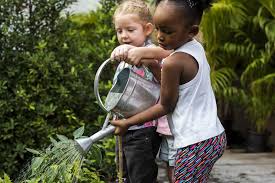
Children develop their potential and acquire basic living skills through participating in daily activities. Potentially hindered by their specific symptoms, children with autism normally have their therapeutic activities indoors and rarely outdoors. Activities held outside could increase their opportunities for contact with the outdoor environment, and this could further influence their development. A growing number of studies indicate that outdoor activities provide many benefits for people, including restorative or stress-reducing effects.
First, most children with autism tend to have poor relations with others. Second, they have language and communication disorder, delay in or total lack of multiple nonverbal behaviors. Third, children with autism have repetitive and stereotyped patterns of behavior, interests, and activities. In addition, some children with autism accompany other disorders, such as inattention or hyperactivity.
Studies on adults found that exposure to outdoor natural environments can have both physiological and psychological benefits , including attention restoration, vitality arousal, emotional restoration e.g. anger decreased, increasing family interaction.. In addition, the natural odors improved affective status: calmness, alertness, and mood.
Social interaction. There are two secondary concepts in this main concept. The first one is initiative and the second is increasing social interaction. Because there are many types of novel and abundant scenarios, and playground equipment that children like to play with, they can attract children’s attention and promote children to take initiative in talking to other people; hence they can increase children with autism‟s social interaction.
a. Initiative: Taking him outside we are able to talk about different topics, being able to look at various plants/ flowers gives us an interesting topic to talk about; when he sees something he likes he will say ”I want it”.
b. Increasing social interaction When he was growing plants, he would be very happy, he would be very joyful…I would tell him, “mom will take you to apply fertilizer”. I think this is a type of social interaction. He can [use it to] understand many things. [For example], maybe today the subject is mom, and then he could come in contact with mom’s emotions.
Communication. The second main concept is communication; there are two secondary concepts within it. There are a lot of multiple natural elements outside and the outdoor environment changes all the time, so they provide an opportunity for children with autism to speak about many different things and increase their content of speech.
a. Promoting speaking ability At the beach he will make the connection between waves and the song “moving white waves”. So it seems as if they can make connections between an object and an experience. Whenever we had an experience like this together, I would always encourage his expression.
b. Increasing the content of speech Because the outdoor environment changes all the time, this provides an opportunity for him to speak about many different things.
Behavior. The third main concept is behavior.
There are four secondary concepts within it, including promoting positive behavior, promoting the ability to accept the changing circumstances, decreasing ritualistic behavior, and reducing agitations.
a. Promoting positive behavior There are many things that attract children in an outdoor environment, so children like to play outdoors. Some participants mentioned that they would use it as a reward to motivate children‟s “good” behavior. Therefore children will show more positive 5 behaviors, such as being more obedient to achieve the purpose of playing outside.
b. Promoting the ability to accept the changing circumstances Because there are many various natural elements and they change all the time in the outdoor environment, hence, if children with autism often play in outdoor environment, they will contact with a variety of plants and changing things, this help them to promote the ability to accept the changing circumstances.
c. Decreasing ritualistic behavior Many children with autism have ritualistic behavior of food, and they prefer particular foods and do not like vegetables. There are many horticultural crops outdoors, such as flowers, fruit trees, and vegetables. If children are frequently exposed to these horticultural crops, it can reduce their sense of exclusion of certain plants. In addition, the body energy expenditure after exercise outdoors, children will feel hungry easily and eat more, so can decrease children‟s ritualistic behavior of food.
d. Reducing agitations The vestibular sensory system is the balance sense that helps children respond to changes in speed and direction while moving. Many participants mentioned that there are a lot of activities outdoors, such as cycling, running, and playing recreational facilities can stimulate the vestibular sensory system, and many parents and teachers said that their children and students will be more stable after doing the kind of activity. They need to stimulate their vestibular systems, because if their vestibular systems are not stimulated, they will be agitated.
Emotion. The fourth main concept is emotion. Because There are many beautiful landscapes, plants and a variety of elements change, including water changes in the outdoor environment, that can attract children‟s attention and positive emotions, such as happiness. Some outdoor activities, such as horticulture activities can provide children with autism an opportunity to take care of plants, and they can obtain a sense of achievement for this kind of activity. In addition, let‟s look at this text, a participant mentioned, going outside to see scenery can claim her child down more, and she found when the scenery is dynamic, his heart will be still.
a. Increasing the positive emotions Going outside to see scenery calms him down more. When the scenery is dynamic, his heart will be still. If the scenery is still, he will be more agitated. (P6)
b. Decreasing the negative emotions 6
Cognition
a. Improving to learn new things.
Because there are multiple natural elements, such as various plants, varied landforms in the outdoor environment that attract children’s attention, stimulating their interest in active learning, and allowing a first-hand experience of the outdoors. “When I brought him outside to see, to experience, to touch, and then he would tell me, “mom, the leaf smells bad, this one smells good.”
b. Promoting observation ability.
There are multiple natural elements and dynamic landscapes provide many opportunities for children with autism to observe.
c. Reviewing the knowledge learned.
There are many scenery and activities in the outdoor environment, maybe some of them children may have seen on television or books before, or they have ever experienced. Hence by taking children with autism outside not only can teach them new things, but also can help them to review the knowledge learned.
At the beach he will make the connection between waves and the song “moving white waves”. So it seems as if they can make connections between an object and an experience. Whenever we had an experience like this together, I would always encourage his expression.
d. Improving attention.
Some outdoor activities can train children’s attention, such as catching a ball, riding a bicycle. Some participants found that when children complete these activities, their attention will become better. In addition, those activities also can help release children‟s excess energy, thereby reducing the restlessness of children and enhancing their sense of attention.
He looked at the ball and then caught it, it’s a movement for him to see and then to do… I think the movement is good training for him! Because his problem is he doesn’t notice things around him, so you can let him practice by doing these kinds of activities. The other activity is riding a bicycle because he has to concentrate on the process of riding. If he doesn’t do it, he will fall down.
Autistic sensitivity
a. Decreasing extreme response to certain sensitive stimulations
Children with autism appear to sense the world in different ways to other people. Some seem to be hypersensitive and some appear to be hyposensitive. Many participants talked about their children who were afraid of touching sand or grass before, but after guiding and repeated exposure, their extreme response was 7% decreased, and they even like to play in the sand or grass now. Hence, outdoor activities help to decrease children‟s extreme response to certain sensitive stimulations.
We decreased his sensitivity [to sand] by taking him to [a beach often], where we put his feet into the sand intentionally. Of course, he first felt an itch, but he didn’t feel too much of it later…[Now I] often take him outside, and his endurance [to withstand autistic sensitivities] is better. For example, [the sensitivity] he feels decreases bit by bit, and he learns “actually, it doesn’t matter”.
Physical activity
1. Promoting body coordination.
There are many recreational equipment outdoors, such as balance beam, climbing facilities, etc can promote children‟s body coordination. For example, children can promote their sense of balance by riding bicycles. His physical fitness is much better than before, and he has become very healthy, it’s really better than before.
2. Promoting physical fitness
Engage in physical activities outdoors that would not only help release children’s excess energy but also can promote their good health. He learned to ride a bicycle and did some exercises outdoors. After doing these, his muscle coordination got better and his sense of balance also was better, because some exercises can help train the sense of balance.
 365 Nutrition